Workday + Sana: Unlocking the New Front Door for Work

Workday’s definitive agreement to acquire Sana will power a new Workday experience where knowledge, data, action, and learning come together as one and create the new front door for work. Sana CEO and founder Joel Hellermark discusses the strategic move. 

Gina Sheibley Joel Hellermark podcasting

Audio also available on Apple Podcasts and Spotify.

At just 13 years old, Joel Hellermark, CEO and founder of Sana, stumbled upon public programming courses from Stanford University. This early fascination with code and AI soon blossomed into a firm conviction: AI would fundamentally change how people access knowledge and interact with the digital world. 

He believed that the future wasn’t about searching for information, but about conversing with it. This belief was the genesis of Sana, a leading AI company building the next generation of enterprise knowledge tools. It’s also what led him to the stage alongside Aneel Bhusri at Workday Rising, announcing Workday’s definitive agreement to acquire Sana.

Hellermark recently sat down with Gina Sheibley, Workday's chief communications officer, to discuss the significance of the moment.

In their conversation, Hellermark explained that the future is not just about a better user interface. It’s about forging a new relationship with technology, where AI acts as a personal work agent, taking on the tedious, repetitive tasks that consume our time. This transformative approach, where AI streamlines and simplifies our interaction with work, is what's being called “the new front door to work”, and it's being built upon the foundation of Sana's AI capabilities.

The Sana Story: From Search to Agentic AI

When Hellermark founded Sana in 2016 aged 19, his mission was singular: transform how humans access knowledge with AI. 

After developing the world's first AI-powered learning platform, the Sana team set their sights on other forms of knowledge access. "We started as sort of a 'Google for your company'," Hellermark explained.

This shift transforms the user experience from one of navigation and clicks to one of simple, intuitive communication, fundamentally changing how we interact with technology and freeing up human potential for more strategic, creative, and fulfilling work.

The next leap happened with the 2023 advancements in generative AI. Sana began pioneering AI assistants and agents grounded in company knowledge and data. 

Now, together, Sana and Workday are aiming for the next frontier in enterprise AI: the agentic era. 

An agentic system acts on your behalf, understanding intent and navigating complex applications to get tasks done. This shifts the user experience from one of navigation and clicks to one of simple, intuitive communication, fundamentally changing how we interact with technology and freeing up human potential for more strategic, creative, and fulfilling work.

The Business Imperative for AI Adoption

Hellermark shared advice for enterprise leaders navigating this critical moment is simple: prioritize scalable AI adoption over short-term ROI. 

"The biggest mistake I see companies making is they're so focused on the business case," Hellermark explained. "They want to have that very clear return on investment from day one. But the real value comes from getting people to use these tools."

He argued that the productivity gains from AI will become more significant over time as the models become more capable, moving from handling tasks that take minutes to those that take hours, and eventually, days. 

The key is to build a culture where employees are comfortable and empowered to leverage these new AI technologies. 

"You need to be bold. You need to lean into that adoption," he urged. 

A Bold Bet on Augmenting Human Intelligence

For Hellermark, AI is set to fundamentally shift how we augment human intelligence. He argues that we are only at the beginning of realizing AI's potential, with current models being just the first generation of what he calls "superhuman teaching systems" that can find a user's unique path through any course and pinpoint knowledge gaps. 

He believes the ultimate goal is a universal assistant that knows you intimately based on your writings, role, and historical context.

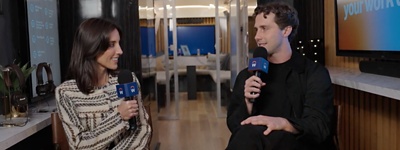
"The biggest mistake I see companies making is they're so focused on the business case," Hellermark explained. "They want to have that very clear return on investment from day one. But the real value comes from getting people to use these tools."

Hellermark holds a philosophical outlook on the power of this technology, seeing it as the next great enabler of human ingenuity. He draws a parallel to historical shifts, noting that every time access to knowledge has changed, the world has changed for the better. 

Sana, he explains, is the first system to index all the knowledge within a company and make it universally accessible for every employee. He sees AI as a "distribution game" and believes that the companies that effectively connect powerful foundational models to their users and their context will succeed. 

Workday + Sana: The Future of AI 

What began with a young man's curiosity is now set to build a better, smarter, and more intuitive way to work for millions of users worldwide.

The definitive agreement for Workday to acquire Sana is the beginning of a powerful new chapter for both companies. The combination of Sana's leading AI platform with Workday's deep context around people and money, creates an intelligent experience that will truly empower people with the capabilities of agentic AI. 

Ninety-eight percent of CEOs foresee an immediate business benefit from implementing AI. Download this report to discover the potential positive impact on your company, with insights from 2,355 global leaders.

More Reading