Rethinking HR Technology Decisions in Europe: Lessons from the Latest Fosway 9-Grid™
Why Europe’s HR leaders are rethinking long-term platform bets, and what Workday’s decade-long leadership in the Fosway 9-Grid™ reveals about the future of work

Why Europe’s HR leaders are rethinking long-term platform bets, and what Workday’s decade-long leadership in the Fosway 9-Grid™ reveals about the future of work
Consider how quickly yesterday’s breakthrough becomes today’s baseline; in this climate of relentless technological churn, HR leaders across Europe face a daunting challenge: making the right long-term bets on platforms that will shape how people work, grow, and thrive. Few decisions have such far-reaching implications. Choosing an HR system defines the architecture of work itself, shaping how organizations attract talent, empower employees, and respond to disruption, extending far beyond compliance or process efficiency.
This is why the Fosway 9-Grid™ has become a vital compass for European decision-makers. And it is why Workday’s recognition as a Strategic Leader Excelling Higher for the tenth consecutive year—ever since the very first edition of the Fosway 9-Grid™—stands out as a milestone that signals enduring leadership. Fosway’s five-dimensional framework provides a contextual, pragmatic lens. It evaluates vendors not only on performance and potential, but also on market presence, total cost of ownership, and—critically—trajectory.
In its latest Cloud HCM 9-Grid™, Workday has again been positioned as Strategic Leader Excelling Higher. This marks the tenth year in a row that Workday has been recognized, underscoring both consistency and momentum. The designation carries weight, pointing to a deeper story behind the label. The analysis reveals both the current state of the market and the ways in which European organizations are reimagining the future of HR.
At the heart of Fosway’s methodology is a subtle but powerful idea: “all of the nine zones have value,” as the Fosway Group emphasizes in its 9-Grid™ methodology. The 9-Grid™ challenges organizations to ask better questions. What balance between value potential and cost is optimal for us? What kind of trajectory do we need—rapid innovation or stable maturity?
This phrase highlights the European business environment marked by complexity: diverse regulatory landscapes, multiple languages and cultures, varying levels of digital maturity. A model that integrates customer advocacy, real EMEA track records, and nuanced cost assessments is better suited to guide leaders through these realities.
The 2025 Fosway 9-Grid™ report situates its analysis within a broader transformation. Several trends stand out:
Consolidation and ecosystem building. Suites are expanding through acquisitions of adjacent modules such as payroll and workforce management, reducing the space for independents.
Employee experience under pressure. Despite years of focus, many organizations admit their HR and EX stack still falls short of expectations. Progress now depends heavily on AI inside HR platforms, which must deliver joined-up, explainable outcomes across pay, time, and communications.
AI moving from hype to redesign. HR leaders no longer see AI as overhyped; they expect material impact but recognize the true challenge lies in work redesign. This includes deciding which tasks move to AI agents, which remain with people, and how these decisions vary by function and country.
Skills shift from mapping to planning. Buyers now demand validated skills data tied to tasks and credentials that directly inform planning and pay transparency, not just dashboards.
Regulation reshaping design. With the EU AI Act and Pay Transparency Directive coming into force by 2026, explainability, human oversight, and audit-ready data trails are becoming competitive filters.
Taken together, these shifts underscore an inflection point. Legacy, siloed HR systems cannot support the agility or insights modern organizations demand. What is required is a unified architecture—systems capable of aggregating and analyzing workforce data holistically, embedding intelligence into every interaction, meeting varying regional requirements, and remaining audit-ready by design.
Workday’s repeated designation as a Strategic Leader is grounded in several factors highlighted by Fosway:
The Power of Workday. Workday’s single architecture—one data source, one security model, one user experience—remains a distinctive strength. This eliminates fragmentation, enabling trust, faster innovation and richer analytics.
Investment in AI and skills. Workday Illuminate enables “total workforce intelligence” and supports the transition to skills-based organizations.
Strong European presence. Unlike competitors whose European footprint can be limited, Workday has built credibility and scale on the ground across EMEA.
For organizations grappling with fragmented HR landscapes, these factors matter. Siemens Healthineers, for example, turned to Workday to unify more than 500 HR systems spread across global operations. The rationale was simple: complexity is the enemy of agility, and only an integrated system can support both compliance and innovation at scale.
If the first era of HR technology was about digitizing processes, and the second about enabling analytics, the third is about skills. Traditional job titles no longer capture the fluid realities of modern work. As Deloitte and others have emphasized, organizations must move towards skill-based models that support continuous learning, redeployment, and empowerment.
Workday’s Skills Cloud and AI-driven insights play directly into this shift. Aashna Kircher, group general manager of oCHRO products at Workday recently pointed out, “Over 70% of Workday customers have already adopted Workday Illuminate capabilities. This is enabling human-AI collaboration that’s context-built based on our customers’ real experiences at work.”
By connecting disparate data points, from performance to learning to mobility, organizations gain a living map of their workforce capabilities. In industries facing acute talent shortages—from healthcare to manufacturing—the ability to identify, develop, and redeploy skills quickly can determine competitiveness.
So what should HR leaders in Europe take away from the latest 9-Grid™? Several lessons emerge:
Context is everything. Use the 9-Grid™ not to chase rankings but to interrogate fit: does this vendor align with your organizational complexity, cost profile, and cultural needs?
Plan for skills, not roles. Future-ready organizations are already investing in AI-driven skills intelligence. Systems that cannot support this shift risk rapid obsolescence.
Prioritize trust. Early involvement of stakeholders, transparent governance, and demonstrable value delivery are non-negotiable. The technology may enable change, but trust secures adoption.
Look at trajectory. A vendor’s momentum—its capacity to innovate, scale, and adapt—matters as much as current performance. Yesterday’s leader can quickly become tomorrow’s laggard.
The Fosway 9-Grid™ reminds us that HR technology decisions are not one-off procurement choices. They are architectural bets on how work itself will be structured. They influence how resilient an organization is to shocks, how adaptable it is to shifting demographics, and how compelling it is to the next generation of talent.
As European organizations navigate economic headwinds, demographic shifts, and the disruptive promise of AI, the call is clear: build systems that are integrated, intelligent, and human-centered. The report highlights Workday as a Strategic Leader Excelling Higher in the Fosway 9-Grid™ for Cloud HR. For the tenth consecutive year since this grid was first published, Workday has been named as a Strategic Leader, underscoring its role as a leader among leaders and a trajectory that continues to set the pace for the industry.
The future of HR rests on constructing an ecosystem where technology amplifies human potential, where data fuels trust, and where organizations act with agility in an uncertain world.
More Reading

Together, we will help organizations build the HR function of the future, not just dream about it.

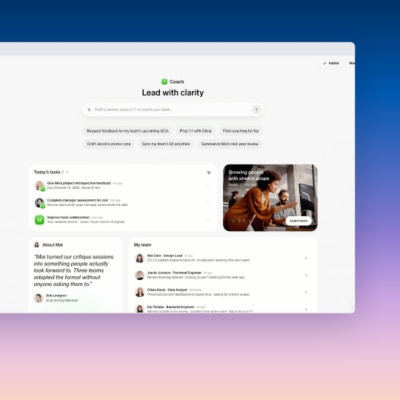
Sana Coach brings performance, feedback, sentiment, and leadership coaching into one connected, conversational experience, moving talent development from episodic HR tasks to always-on guidance. Watch a demo.


Workday Brings Employee Benefits Into The Agentic Era
We're launching Workday Total Benefits, the next step in our vision for AI-powered benefits, where AI agents guide every employee to the right benefit decisions and handle the administrative work behind them.