Right to Information 2026: How Europe Is Rewriting Pay Rules
From June 2026, Europe’s right to information will transform pay transparency. Employers must explain salaries, employees gain leverage, and credibility becomes the real test.


Right to Information 2026: How Europe Is Rewriting Pay Rules
From June 2026, Europe’s right to information will transform pay transparency. Employers must explain salaries, employees gain leverage, and credibility becomes the real test.
With Directive (EU) 2023/970, the EU has not simply introduced a new regulation – it has shaken up the salary debate in Europe. All Member States must transpose the provisions into national law by 7 June 2026. The focus is on an issue that has hardly made headlines until now: the right to information. Suddenly, a footnote has become a lever for real cultural change. From now on, it is no longer only the promise of equal pay for equal work that counts, but also the demonstration of it. Pay is becoming transparent and a litmus test for credibility. This fundamentally changes the rules of the game when it comes to remuneration.
In this article, you will read about:
What the right to information means for talent, employees and workers' representatives
What new obligations employers face and how they could be implemented in practice
The consequences of reversing the burden of proof, sanctions and joint pay assessments
How the right to information can be an opportunity for employer branding and culture
The EU Directive targets structural distortions that perpetuate the gender pay gap: glass ceilings, sticky floors, non-transparent decisions. The right to information shifts the debate from belief in fairness to verifiable equal treatment. In future, employers will be obliged to explain in a comprehensible manner how remuneration is determined and how progress within pay bands is possible. In the event of a dispute, the burden of proof shifts: where there are allegations of discrimination or facts from which such discrimination may be presumed , the company must demonstrate the legality of its practices. This changes negotiating positions, organisational culture and expectation management.
The right to information is not a formal enquiry option; it shifts the balance of power in the labour market. Anyone who applies for a job or is already part of an organisation will in future command leverage that was previously largely theoretical.
The Directive already has an impact on recruitment. Companies will have to state a starting salary or at least a range before the first interview takes place (some Member States may even decide that this information must be included in job postings). What used to be a negotiation tactic is now mandatory information. This changes the dynamic: talent can assess their negotiating position more realistically and discuss on an equal footing. Questions about salary history are also prohibited. This seemingly small change breaks the cycle in which a low starting salary dragged entire careers down.
Those who already work for the company will also be given more powerful tools. They can demand information on their own remuneration, in black and white. In addition, employees are entitled to the average values of their peer group, broken down by gender. It is crucial that these groups are not formed according to department names or titles, but according to objective criteria, which include: skills, effort, responsibility and working conditions. And the Directive takes a comprehensive view of remuneration: basic salary, bonuses, allowances, overtime, benefits in kind, pension entitlements – all of these will likely have to be put on the table. This wide focus is designed to reveal how widely total packages vary.
Not everyone wants to approach the HR team personally. That is why the Directive expressly stipulates that workers’ representatives such as works councils and trade unions, or equal opportunities bodies can submit requests on behalf of employees. This gives collective actors more weight and removes the issue of remuneration from the sphere of individual conflicts.
Particularly relevant for group companies: if remuneration conditions are determined from a single source across the group, employees may also demand that the assessment of whether they are in a comparable situation to other workers shall not be limited to a single legal entity, but carried out across locations and entities. This broadens the scope of review. What previously disappeared behind local, industry or organisational boundaries could now be made comparable.
The Directive leaves little room for vague declarations of intent. Employers must ensure that information is available on request available, and that it actually be understood and used.
Is your organisation able to clearly document its remuneration logic?
Accessibility and comprehensibility criteria for pay determination and pay progression do not belong in the small print. They must be clearly formulated, easy to find and understandable to every employee. This also means actively informing employees of their right to information at least once a year. Those who take this seriously signal that transparency is a foundation of corporate culture and not a last-minute obligation.
Two months sounds generous, but it isn't. Within this period, a request for information must be answered completely. Unclear or delayed responses are not only disruptive for the employee, but could also open the door to legal consequences. This makes every request a test case: Is the organisation able to clearly document its remuneration logic?
For these processes to be sustainable, companies need clear roles, documented justifications and standardised procedures. Templates, internal service level agreements and escalation paths create reliability. These result in a robust set-up that can withstand pressure, whether from an accumulation of requests or from the public attention that a single case can generate.
Remuneration data is highly sensitive and confidential information. It concerns not only columns of figures, but also very personal realities of life. The Directive stipulates that companies must make this pay data visible without neglecting the protection of privacy. This creates a delicate balance: the right to transparency must not become a gateway for data protection violations.
Companies should ask themselves: What information is really necessary to meet the legal requirement? Anything beyond that could become a risk. Transparency does not mean revealing every detail, but rather disclosing relevant data in a targeted and justified manner.
Average values are only meaningful if they protect the privacy of individuals. That is why anonymisation is a means of maintaining trust. Employees are more likely to accept transparency if it is clear that their individual salaries are not being put on display.
Who is allowed to see the data? The Directive sets clear guidelines here. Where there is a risk of re-identification, employees should not have access to pay-related information. Instead, only the workers’ representatives, the labour inspectorate or the equality body shall have access to that information. This relieves the burden on employees and puts the handling of sensitive information in experienced hands.
The EU Pay Transparency Directive may be a good opportunity for companies to consider reviewing their own procedures and assessing if and when a data protection impact assessment is required. Data protection impact assessments help identify what risks exist and how they can be minimised. . They help ensure legal certainty and raise awareness that transparency and data protection are not contradictory, but should be considered together.
Conducting a data protection impact assessment could help create a framework that protects privacy while taking the right to information seriously. Employees, works councils and supervisory authorities would also receive a signal: this company has understood the balancing act and is building transparency on a foundation of responsibility.
The Directive does not rely solely on transparency, but also incorporates clear enforcement mechanisms. These change the balance of power between employers and employees – with consequences that go far beyond the legal details.
A decisive paradigm shift: if a person establishes facts from which discrimination may be presumed (or, in the event the company has failed to meet its obligation under the Directive, if a person simply alleges discrimination), the company must prove that the difference is lawful. What used to fail due to the high hurdles of evidence is now being reversed.
Only when structures are built on trust can subsequent conflicts be defused.
For companies, this means that those who do not have consistent, documented criteria at their disposal risk losing the case at the formal level. Employees, on the other hand, are given a tool that significantly strengthens their chances in disputes.
The pressure becomes even more apparent in the case of systematic gaps. For employers with 100 or more employees, a joint pay assessment becomes mandatory if there is an unjustified gender pay gap of at least five per cent within a comparison group and it is not corrected within six months. This analysis forces the disclosure of the causes and concrete corrective measures. This puts companies under additional scrutiny.
Behind all this are tangible consequences. Member states must introduce effective sanctions, ranging from heavy fines to possible revocation of public benefits, and they shall ensure that wronged workers have the right to claim and obtain damages that should cover the full loss and damages sustained. Employees can claim back pay, lost opportunities and non-material damages. Added to this is the almost incalculable loss of reputation when a case becomes public. For companies, this means that preparation is not just about compliance, it is also about risk prevention and part of strategic self-protection.
Governance is the starting point. Responsibilities should be clearly distributed: HR top management steers, IT ensures data quality, legal ensures legal certainty. Additionally, works councils and employees’ representatives can act as co-creators, in accordance with local regulations, rather than retrospective auditors. Only when structures are built on trust can subsequent conflicts be defused. A centre of excellence for remuneration could bundle this role: guidelines, job evaluation, pay bands, quality controls – everything from a single source, with a clear mandate.
Every organisation preparing for the right to information encounters recurring stumbling blocks. Small comparison groups carry the risk that individual salaries become indirectly identifiable. Not setting minimum limits and clear rules for aggregation, in accordance with the applicable laws, could mean running into data protection problems. Bonus models could also cause unrest if they override the logic of the basic salary. Transparent criteria can help prevent these distortions.
Inconsistent level practices mean that identical roles are evaluated differently. A global grid with documented deviations is more than just order; it is the basis for credibility. Delayed or unclear responses to requests for information are equally sensitive. Those who play for time or respond with placeholders only exacerbate the problem. A better approach is an escalation path with clear responsibilities and robust processes.
Last but not least, the publication of salary ranges can create tension within the company. The response to this determines the culture. With good communication guidelines, Q&A sessions and a clear narrative on development opportunities, conflicts can be defused before they escalate.
This raises a number of key questions for board members. Is the evidence for significant pay differences documented in an audit-proof manner? Is there a uniform job architecture with objective criteria? Can we provide complete answers to any enquiries within two months? Should we carry out a data protection impact assessment, including an action plan? Are our managers able to talk about remuneration clearly and respectfully? And do we have a plan for joint remuneration assessment in the event we need to carry one out? These questions are not theoretical thought experiments, but the yardstick by which companies will be measured in the future.


More Reading

Together, we will help organizations build the HR function of the future, not just dream about it.

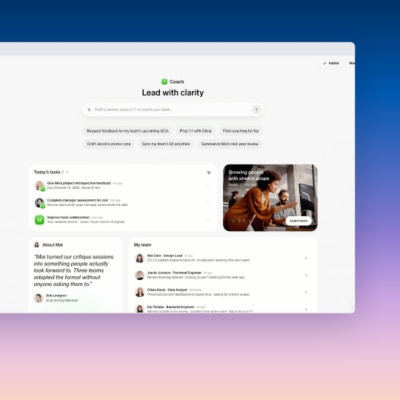
Sana Coach brings performance, feedback, sentiment, and leadership coaching into one connected, conversational experience, moving talent development from episodic HR tasks to always-on guidance. Watch a demo.


Workday Brings Employee Benefits Into The Agentic Era
We're launching Workday Total Benefits, the next step in our vision for AI-powered benefits, where AI agents guide every employee to the right benefit decisions and handle the administrative work behind them.