Floyd Walterhouse: Don't Fall in Love With Technology
McKee Foods' longest-tenured IT leader on a foundational Workday partnership, the limits of AI enthusiasm, and why the person on the other side of the technology is always the point.


McKee Foods' longest-tenured IT leader on a foundational Workday partnership, the limits of AI enthusiasm, and why the person on the other side of the technology is always the point.
In this article we discuss:
Floyd Walterhouse has worked at McKee Foods for nearly 48 years. He was there when they used time clocks that documented hours on rolls of paper tape. He was there when they moved to a Unisys mainframe, when they implemented PeopleSoft, when Oracle acquired PeopleSoft. And he was there when McKee signed a contract with a company called Workday.
He is still there now as an application systems manager. And what has kept him, through every platform and every era, is a conviction he traces back to a professor he worked for decades ago: Don't fall in love with technology. Fall in love with what you can do with it to make a meaningful difference in the lives of others.
The story of how he learned that starts well before McKee.
Walterhouse grew up in small-town Tennessee, the kind of place where you knew most people and most people knew you. After attending boarding school, he spent a year in Central America on a privately funded humanitarian project, helping build a hospital on the border of Belize and Guatemala. Then he came home, started college, and—after a good pitch from a professor—dived into studying psychology. Two years in, however, a field trip to the psych ward at Erlanger hospital gave him a much-needed reality check.
He switched to computer science.
At the time, a four-year degree in the field didn't exist. Walterhouse finished a two-year program and briefly went to work for the professor who'd recruited him. After that, he took a job at McKee Foods, where he'd already done contract work.
He has been there ever since.
When McKee started looking at what was available on the market, they became an early PeopleSoft customer. They stayed on it through the Oracle acquisition, watching the roadmap go quiet, and started wondering what came next. Walterhouse found a website called davesnextmove.com—a placeholder registered by PeopleSoft founder Dave Duffield, who most people in the industry suspected wasn't finished yet. He brought it to the leadership team, and McKee decided to take the leap.
The message that came back changed things. McKee signed with Workday in December 2006 as their seventh customer, at a time when the platform had only one live deployment. What made the decision easier wasn't that Workday was proven—it wasn't. It was that they knew Dave, knew his philosophy, and recognized most of the team. It felt less like switching vendors and more like continuing a relationship.
From the start, McKee understood the arrangement that way. “We weren't just signing a contract with a vendor,” Walterhouse says. “We were joining a partnership.” The McKee team committed to keeping their eyes open, passing feedback, and helping shape what the platform became, including pushing back on Workday's early plan to leave payroll to ADP. McKee didn't want that. Workday listened, and asked if McKee would serve as design partners for U.S. payroll instead.
“We weren't just signing a contract with a vendor. We were joining a partnership.”
The team that followed through on that commitment did the hard work of a Release 7 implementation. This early software had minimal configurable security and no calculated fields yet. McKee went live in April 2009. Nearly 40 upgrades later, they have never spent a single hour on outside consulting help to get through one. Walterhouse's view on why is straightforward: Workday's QA does outstanding work. You don't need to replow every inch of ground they already covered. You find your critical features, verify they work, and you're done, usually within a week of Preview Sandbox opening.
What that efficiency buys is the ability to think forward.
With infrastructure off his plate, Walterhouse sits in on company strategy sessions and tracks Workday's roadmap—using Workday Community to see how others leverage the platform as a community ambassador.
On AI, he is thoughtful and specific. He sees it as a capable assistant, one that can meaningfully reduce the time spent on repetitive cognitive work and help people who can tell a good story get further faster. “The most important thing I've seen so far,” he says, “is that you have to be somebody that can think through and tell a good story.” A strong prompt, like a strong support case, requires clarity about what you actually need.
“The most important thing I've seen so far is that you have to be somebody that can think through and tell a good story.”
That skill doesn't come from the tool.
He's watched AI reshape Workday's roadmap in ways he finds exciting. The framework-level improvements that don't carry an AI label but underpin everything else matter too.
For Walterhouse the through line, as always, is people. The technology should be invisible enough that the people using it can focus on what they're actually trying to do. When it works that way, the time it returns shouldn't be an invitation to fill the calendar back up. “My fear,” Walterhouse cautions, “is that the expectation with AI is that we can throw more at people. It’s really on the leadership team to protect that time.”
“My fear is that the expectation with AI is that we can throw more at people. It’s really on the leadership team to protect that time.”
The tools have changed more times than Walterhouse can easily count, but this much remains true: The technology is the means. The person on the other side of it is the point.
And that belief is present throughout Walterhouse’s personal and professional life. The year in Central America helping build something people needed lit a fire in Walterhouse. Later, when a tornado tore through the Chattanooga area, he went out with a crew and helped rebuild roofs. For nearly a decade he volunteered as an EMT and firefighter, eventually serving as captain of the ambulance service at Station 1 in Collegedale. The platforms changed. The instinct didn't.
That's what the professor told his class, years ago. Walterhouse has spent nearly 48 years proving he meant it.
More Reading

At Rising this week, Workday Data Cloud opened the System of Record directly to AI agents, with no extracts, no duplicate data, and no rebuilt security. Here's how its four layers give agents live data, shared business context, and governed actions they can be trusted with.

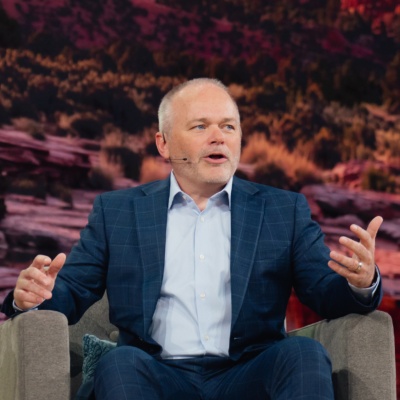
At Workday Rising, Intermountain Health’s Mike Harmer shared how Workday agents and a unified data foundation are giving caregivers time back, lowering costs, and improving patient care.

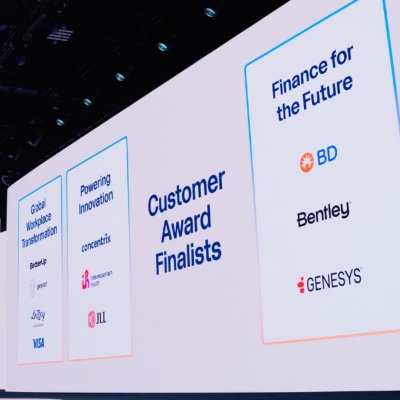
Hear from the leaders behind transformations across HR, finance, and IT about what each award means to them.