New Global Workforce Report: 5 Takeaways Leaders Can Act on Now
Labor market mobility may be low, but work inside organizations is changing fast. Our latest Global Workforce Report shows how adaptable leaders can build momentum from within.


Labor market mobility may be low, but work inside organizations is changing fast. Our latest Global Workforce Report shows how adaptable leaders can build momentum from within.
In this article we discuss:
Today’s labor market is sending mixed signals. As AI adoption, new skill demands, and organizational restructuring drive significant change at both the organizational and employee levels, broader indicators of workforce growth are stalling.
Workday’s latest Global Workforce Report, The Adaptability Advantage, underscores both sides of that tension. While employees are being asked to adapt to evolving role demands and expectations, new opportunities—both internal and external—are becoming harder to find.
But what may look like a stagnant labor market can actually be a rich environment for adaptable leaders to help employees get unstuck. When traditional career moves are less available, leaders have an opportunity to create new ways for their employees to grow, build the skills and experience they’ll need in the future, and stay engaged as their work changes.
“Employees may not be changing jobs, but their jobs are changing around them,” said Phil Willburn, vice president, people systems, intelligence & support, Workday. “Leaders need to be honest about what's different and give people a way to keep up."
Here’s a look at five big takeaways from the report that leaders can act on now.
Career growth traditionally comes with movement: developing the skills to move into a different team, a higher-paying role, or a new job somewhere else. Right now, all three are harder to come by.
Internal mobility has slowed, and the external market remains especially difficult to break into: roughly one in 100 applicants ultimately gets hired.
But staying in the same job does not mean doing the same job. AI and changing skill demands are reshaping roles from within, requiring employees to learn new capabilities and take on work that may look very different from when they were hired. Employees who use AI for almost all of their work have mixed feelings about this: 76% of them say AI will create new career opportunities, while 62% agree it will make their current skills less valuable.
The opportunity for leaders: Opening up a conversation about AI’s dual impact on career growth—creating new opportunities while making some skills less relevant—can help. Let employees co-design a role that helps them take advantage of AI capabilities and irreplaceable human skills, including taste, judgement, and creativity.
The hiring market is getting more crowded, especially in industries exposed to AI. Applications per offer rose from a median of 58 in July 2025 to 69 in July 2026, even as overall hiring demand remained relatively flat. The biggest bump occurred in financial services (+27% from last year) and tech and media (+40%).
More applicants, however, are not necessarily producing better matches. Hiring managers still report difficulty finding candidates with the right skills, while misalignment around pay, location, and flexibility continues to keep roles open. All of this puts more pressure on how organizations evaluate talent.
The opportunity for leaders: Broaden how qualified talent is defined. Look beyond exact titles and traditional career paths to identify transferable and adjacent capabilities, expanding access to strong candidates who may be overlooked by rigid screening criteria.
AI is changing the employee-employer contract. Employees are being asked to adapt to new tools and evolving expectations. In return, they’re looking for stronger development support and a visible path to keep growing inside their organization.
The changing skills picture adds another layer. Between September 2025 and July 2026, across more than 500 enterprise employers on the Workday platform, demand shifted from general AI literacy to practical AI execution. At the same time, mentions of management and leadership skills fell 7%, alongside a 13% decline for learning and development skills.
That creates a tension for leaders: The very capabilities showing up less often in job postings—training, development, and managing change—may be the ones organizations need most to make AI adoption successful. Employees see the gap, too: While 79% know what skills they need to succeed, only 66% feel their employer supports them in developing those skills.
The opportunity for leaders: Treat AI adoption as a shared investment with employees. Build trust by pairing new AI expectations with employee development and enablement, and a visible commitment to helping them succeed.
Retention may look relatively stable, but employees are still thinking about leaving. Nearly one-third say they’re likely to look for an external role in the next 12 months, compared with voluntary turnover of roughly 16% annually.
In an uncertain labor market, staying put does not necessarily signal stronger commitment to their company. Employees may have fewer attractive opportunities to leave, but they are also becoming less likely to recommend their company as a place to work. This suggests a workforce that feels stuck.
Career progression may be part of the problem. Just 63% of employees feel favorably about their ability to advance within their organization, making career path the weakest area of growth measured in the report.
The opportunity for leaders: Ensure retention translates into engagement and advocacy. Go beyond turnover as a primary retention metric and use career-path visibility, manager support, recognition, and understanding of company strategy as signals of whether employees are genuinely invested.
Across the first half of 2026, the labor market showed signs of stabilization, with hiring moving closer to break-even by the second quarter. But flat growth does not mean little change when you look closer. Some employers are still reducing headcount, while others are growing. And employees are feeling that unevenness directly: 38% report experiencing reorganization or restructuring in the past year.
This means broad labor-market indicators only tell part of the story. The world of work is shifting significantly across teams, roles, and individual skills.
The opportunity for leaders: Build workforce plans around the realities of your specific talent market, not broad labor market averages. Your company size, industry, and AI skill demand can create unique pressures. A targeted view can surface opportunities and constraints that aggregate trends obscure.
Periods of low labor market mobility can feel like a holding pattern. But the workforce is still changing, and employees are still looking for ways to evolve and grow.
The Adaptability Advantage highlights a unique opportunity for leaders to embrace current complexities and rapid change, giving their employees the safety, space, and guidance to pursue new paths with confidence.
In a labor market defined by uncertainty, adaptability is a crucial advantage.
More Reading

Together, we will help organizations build the HR function of the future, not just dream about it.

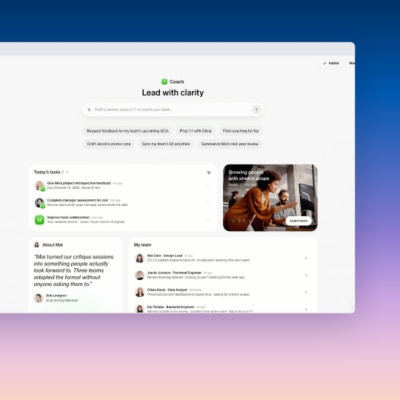
Sana Coach brings performance, feedback, sentiment, and leadership coaching into one connected, conversational experience, moving talent development from episodic HR tasks to always-on guidance. Watch a demo.

:Square?wid=400&hei=400)
There was no top-down mandate, pilot program, or central engineering project. Instead, HR practitioners spotted a friction point in their own workflows and used Sana to fix it themselves.