Sustainable Events by Design: A Workday Guide for Leaders
Learn Workday’s practical framework for designing sustainability into workplace and event experiences, with real-world examples from Workday Rising.

Learn Workday’s practical framework for designing sustainability into workplace and event experiences, with real-world examples from Workday Rising.
In this article we discuss
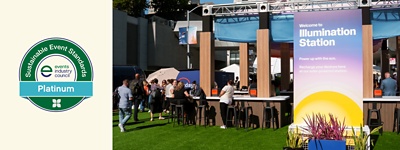
Today, the Events Industry Council (EIC) announced that Workday Rising earned the EIC Sustainable Event Standards’ Platinum-level certification—the highest possible distinction.
This is the second consecutive year Workday has received this recognition from the council, which is the global voice of the business events industry on advocacy, research, professional recognition, and standards.
“We’re proud of this recognition and our teams’ hard work to achieve it,” said Workday Chief Sustainability Officer Erik Hansen. But, he said, its greatest value is not the badge itself—it’s the framework for operationalizing sustainability across the company’s programs.
“Earning platinum-level certification for a second year reinforces that sustainability isn’t an initiative for us—it’s integral to how we design every Workday experience,” he said.
For all HR and corporate leaders, sustainability is now a top mandate. Whether it’s for a global conference like Rising or for building an internal culture initiative, the challenge remains the same: How to deliver exceptional experiences while staying socially and environmentally responsible.
Sustainability isn’t an initiative for us—it’s integral to how we design every Workday experience.
Erik Hansen
Chief Sustainability Officer
Workday
Corporate events and initiatives have historically left substantial environmental footprints. Today, however, there’s a growing demand from key stakeholder groups—partners, investors, customers, and employees—to become more sustainability-minded.
Business leaders are taking note: 83% reported in a Deloitte survey that they’re increasing investments in sustainability this year. Separate research from PwC found the majority of organizations feel growing pressure to report on measurable results from those efforts.
But the physical demands of corporate events and people initiatives often make overconsumption and waste unavoidable.
“Corporate events bring people together, but they also require significant materials, energy, and travel—and that adds up,” explains Missy Castro, Workday senior experience marketing manager. “At Workday, we address those realities head on. We’ve built sustainability into our planning, and we’re using what we’ve learned to strengthen practices across our industry.”
Too often companies stop at bolted-on efforts that prioritize visibility over outcomes. To make a real impact, sustainability has to be a decision driver at every stage of planning and execution.
The Workday Experience Marketing team uses four strategic pillars to ensure that every major flagship event is built with environmental and social integrity.
Meaningful carbon reduction starts with a clear data baseline. That means capturing detailed inputs—from energy and water to food and beverage, travel, transportation, materials, waste, and recycling—so teams can see what’s driving impact and where changes matter most.
At Workday Rising, for example, the team gathers data across these areas to build a per-person footprint and use an emissions-measurement platform to track total emissions and identify ways to improve.
To strengthen accountability beyond single events, Workday also uses an internal price on carbon, allocating emissions costs across cost centers and using the funds to support renewable energy and carbon credits tied to our net-zero commitments.
Ultimately, measurement serves as a critical decision support tool. With clear insight into what’s driving impact, teams can build smarter guidelines for the programs they run every day and plan more intentionally for sustainable events.
A company’s carbon footprint is deeply connected to the partners it chooses, which makes supplier alignment a high-leverage decision area. It shows up in everyday choices—from venues and catering to merchandise and service providers—and it shapes both experience quality and impact.
Workday has built sustainability into vendor collaboration through contract language, shared expectations, and data collection standards—work that shows up in how it plans internal programs and executes Rising, down to vendor documentation required for certification.
This kind of initiative turns values statements into operating standards that define what partners must provide, how impact will be measured, and how those expectations will be enforced before any work begins.
Events and gatherings create outsized waste, but intentional design can dramatically change outcomes. The biggest waste drivers are set early with upfront decisions about procurement and on-site waste handling. At Rising in 2024, for example, an AI-powered waste-sorting robot (Oscar) helped us to achieve a 94% waste diversion rate—the highest in Rising’s history.
The biggest gains in waste reduction come from designing for circularity upfront:
The goal is always repeatability. When circularity is a priority across program specs, vendor requirements, and attendee touchpoints, waste reduction becomes a predictable outcome.
When people can take an active part in sustainability efforts, it bolsters engagement and builds trust.
Sustainability should be a visible, tangible part of corporate experiences. Offering ways for people to take part in sustainability efforts bolsters engagement and builds trust. Workday Rising does this by building education into experiences through sustainability tours, behind-the-scenes learning, and attendee-facing touchpoints that explain the “why” behind design decisions.
This is where sustainability really connects to culture—by giving people concrete ways to participate, learn, and bring those practices back to their teams. In Workday’s model, that means making choices easy to understand (for example, eco-friendly menu design, solar charging stations, and convenient waste sorting) and creating moments where people can engage with those efforts.
Operationalizing sustainability takes both strategic commitment and practical action. The four pillars provide a framework for organizing initiatives and measuring outcomes. For HR, workplace, and event leaders looking to turn that into action, these are six high-impact places to start:
By embedding sustainability into the design approach for every experience—from global events to internal cultural moments—organizations turn values into visible actions, strengthening connection with important stakeholders and driving meaningful, long-term impact at scale.
Workday is driving a sustainable future through our integrated environmental, social, and governance initiatives. Dive into the 2025 Global Impact Report to explore our progress and the core values shaping our commitment to a better world.

More Reading

Together, we will help organizations build the HR function of the future, not just dream about it.

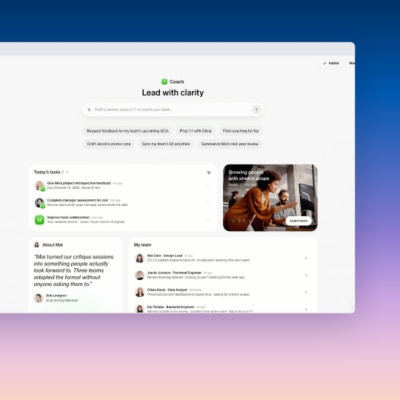
Sana Coach brings performance, feedback, sentiment, and leadership coaching into one connected, conversational experience, moving talent development from episodic HR tasks to always-on guidance. Watch a demo.

:Square?wid=400&hei=400)
There was no top-down mandate, pilot program, or central engineering project. Instead, HR practitioners spotted a friction point in their own workflows and used Sana to fix it themselves.