Trusted Enterprise AI Needs Defense in Depth
Why Workday is joining the Open Secure AI Alliance.


Why Workday is joining the Open Secure AI Alliance.
Workday operates at the heart of the enterprise–HR, finance, and IT–where trust matters most and the margin for error is effectively zero. Delivering safe, trusted enterprise AI requires multiple layers of protection across the entire application stack, from identity management and access permissions to continuous guardrails, monitoring, and governance.
Our commitment to continuously build our internal security engineering programs to meet these high standards is why Workday is joining the Open Secure AI Alliance. Enterprise AI is shifting quickly toward more open stacks and more ambitious agents.
Trust has always been foundational to how we develop and deliver enterprise software, and now it’s foundational to the way we deliver AI. Addressing the security risks associated with AI is an industry-wide challenge that no single company can tackle alone. By joining the alliance community, we will be able to learn and bring our enterprise perspective, and help with the shared work to secure the future of AI.
The Open Secure AI Alliance brings together leaders across cloud computing, cybersecurity, enterprise software, open-source foundations, and AI research to empower those protecting AI infrastructure with the tools, techniques, and shared knowledge they need to secure the AI era. Building on the leadership of the Linux Foundation’s Akrites initiative and OpenSSF community work, alliance members will work together on open approaches to identifying, remediating, and disclosing vulnerabilities.
Take Workday’s Agent Passport for example. We have built clear systems to test, verify and monitor enterprise AI agents as they operate. Our approach is the same for data protection, by upgrading our encryption technology today, we ensure customer data remains safe from highly advanced computing threats.
Developing secure AI requires that we rethink traditional software development. We’ve evolved our Secure Software Development Lifecycle to address AI-specific security risks, ensuring core security components like threat modeling, supply chain controls, and identity architecture are fully modernized for AI products.
We are also using AI to strengthen our own posture from the inside out. By automating code scanning, threat detection and vulnerability management across our development cycle, we give our teams the speed and precision required to defend complex enterprise systems at scale.
While these operational security capabilities are built directly into Workday, we recognize that securing the broader AI ecosystem requires looking beyond our own walls.
True security in the AI era cannot rely on code repositories alone. While open-source tools are critical for hands-on defense, they are only as effective as the research, shared knowledge, and evaluation standards behind them. Before security teams can build better tools, the industry needs shared evidence and a deeper understanding of emerging vulnerability patterns across complex, agentic AI architectures.
To help build that foundation, Workday's commitment to open research and ecosystem collaboration extends through our investment in an AI Centre of Excellence at our European HQ. Through our strategic academic partnerships—including Dublin City University (DCU), University College Dublin (UCD), Technological University Dublin (TUD), and Trinity College—we collaborate directly with leading academic researchers to advance the state of the art in critical AI security domains:
Agentic AI Security: Researching permission boundaries, state management, and isolation patterns for multi-agent enterprise workflows.
Adversarial Testing: Developing methodologies and attack simulations to stress-test systems against prompt injection, jailbreaking, and data extraction.
LLM Explainability: Creating frameworks and explainability methods to make complex model reasoning observable and auditable for enterprise defenders.
These partnerships are part of our commitment to equip the broader research and developer community with insights to deploy AI safely.
Historically, much of Workday’s security innovation has been developed internally to protect our proprietary cloud platform. But as enterprise tech stacks become increasingly hybrid and multi-model, we are intentionally expanding our engagement in open ecosystems.
Where shared tooling can solve common industry challenges without compromising privacy or security, we actively look for opportunities to share tools and research with the industry. One practical example is our open-source Synthetic Data Generator, which helps developers build, test, and evaluate applications using privacy-conscious synthetic datasets.
As we join the Open Secure AI Alliance, we look forward to identifying new areas where our experience securing sensitive HR, financial, and enterprise data can yield practical, open-source defensive assets for the community.
The future of secure AI will not be defined by a binary choice between open and closed models. Enterprise architectures will require both. Frontier closed models offer state-of-the-art reasoning for specific tasks, while open-weight models, open harnesses, and inspectable security tools give defenders localized control, adaptability, and sovereignty when analyzing incidents or running sensitive workflows.
No single model architecture fits every business need. As enterprises adopt AI agents through multiple pathways—including customer-hosted agents and sovereign deployments—the essential question is not whether a model is open or proprietary. It is whether the full system has the identity controls, permission boundaries, data protections, monitoring, and governance required for critical business workflows.
Openness is not inherently safer without the right safeguards in place. But open research, shared evaluation methods, and collaborative defensive tooling can help the industry identify vulnerabilities sooner, improve testing, and strengthen remediation across the AI supply chain.
Workday supports an open, competitive AI ecosystem that includes both proprietary and open-weight models. Our goal is to help customers own their intelligence, maintaining meaningful choice and control over how they deploy AI, while preserving the security, privacy, and trust required for their most critical work.
More Reading
At Rising this week, Workday Data Cloud opened the System of Record directly to AI agents, with no extracts, no duplicate data, and no rebuilt security. Here's how its four layers give agents live data, shared business context, and governed actions they can be trusted with.

At Workday Rising, Intermountain Health’s Mike Harmer shared how Workday agents and a unified data foundation are giving caregivers time back, lowering costs, and improving patient care.

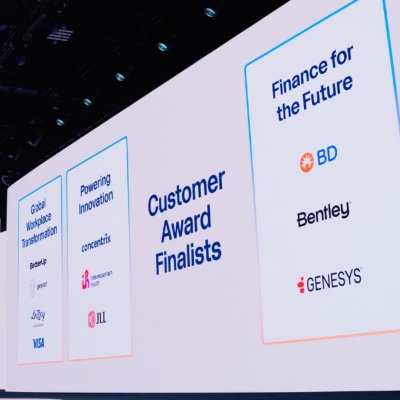
Hear from the leaders behind transformations across HR, finance, and IT about what each award means to them.