People, Money, and Agents: Two Years of Reinvention
The strategy behind build, connect, unify — and the harder work of evolving who we are.


The strategy behind build, connect, unify — and the harder work of evolving who we are.
At 4:50 on the morning of September 3, 1967, every car in Sweden stopped in the road, crossed to the other side, and waited. Ten minutes later, the entire country started driving on the right—after a lifetime on the left. A national referendum had rejected the change by more than 80%. The government went ahead anyway, because aligning with the rest of Europe was the right call for the long run. Within weeks, a nation had relearned its most automatic daily habit.
Hard changes rarely arrive with consensus. They arrive because someone decides the future demands them.
Two years ago, we described ourselves as a company that helped organizations manage their people and money. Today, we describe ourselves as the enterprise AI platform for managing people, money, and agents.
The introduction of agents marks one of the most deliberate and demanding stretches of reinvention in our company's history. We saw the need to innovate organically as well as acquire capabilities that complemented our existing products and services. Between early 2024 and the end of 2025, Workday made a series of acquisitions to move faster and accelerate time-to-market, while AI itself was still taking shape.
When AI shifted from a promising capability to the organizing principle of enterprise software, every established platform faced the same question. Bolt AI onto what you already have or rebuild around it? The first path is faster and safer. We chose the second, harder one. And we realized we had to do it quickly.
As our co-founder and CEO Aneel Bhusri said, "AI is a bigger transformation than SaaS, and it will define the next generation of market leaders." For us, being on the right side of that evolution meant using acquisitions to assemble strategic cohesive capabilities faster than we could build every part ourselves.
That conviction is part of our DNA. "We built Workday to bring innovation back to the worlds of HR and finance," Bhusri has said, "AI gives us the chance to do it all again." Twenty years of trusted data and process history—how decisions flow, how policies are applied, how work actually gets done—is what makes this more than a technology bet. As Bhusri puts it, that depth is what "uniquely positions us to turn generic intelligence into enterprise-grade intelligence."
"AI is a bigger transformation than SaaS, and it will define the next generation of market leaders."
 Aneel Bhusri
Co-founder and CEO
Workday
Aneel Bhusri
Co-founder and CEO
Workday
From the outside, a run of acquisitions can look like a company is desperately buying whatever's hot. We saw it differently. Once we'd expanded the talent and finance core that has always been our foundation, the rest of the strategy followed a deliberate arc: build, connect, unify.
Build the tools for customers to create their own agents
Connect those agents to the systems where work actually happens
Unify all of it behind a single, intelligent experience
Paired with investment in developing our Agent System of Record and Workday Build, each deal occupied an intentional place in our system, designed so the pieces would reinforce one another. Together as build, connect, unify, the strategy reads less like a shopping list and more like a blueprint.
We led with our strength, helping organizations manage their people. The acquisition of HiredScore in early 2024 brought AI-powered talent orchestration into recruiting and internal mobility. From the start, our goal was to develop AI capabilities that keep humans in the lead.
Formula 1 was facing 78,000 applications and an average of 520 applicants per role. With HiredScore, the team:
Cut screening time by 20%
Reduced time-to-fill by 10 days
Brought 76% of A/B-graded candidates into the interview stage
A year and a half later, Paradox extended that same objective to frontline workers. Hiring is one of the most critical moments in the employee experience, yet too often it's slowed down by outdated processes and disconnected tools. Paradox's conversational AI changes that for high-volume, hourly roles, which represent a large share of the world's jobs.
The impact shows up in real operations. 7-Eleven built a Workday Paradox hiring agent it named Rita. The results:
Schedules 85% of applicants in under an hour
Cut time-to-hire by seven days
Saves roughly two million hours of work a year
Handles around 95% of the hiring process
As the company's head of talent acquisition puts it, "Recruiters recruit. Managers manage. And AI does the rest." Chipotle has seen a similar shift with time-to-hire down 75% and applicant flow doubled.
"Recruiters recruit. Managers manage. And AI does the rest."
Head of Talent Acquisition
7-Eleven
But people were only half the platform. With Evisort in late 2024, we pushed AI into finance and legal. More than 80% of business data is unstructured, buried in contracts, invoices, and policy documents. Evisort's contract intelligence lets customers surface and act on that data inside a single system of truth.
Healthcare company McKesson used Evisort to centralize its contracts and make them fully searchable across the entire portfolio. Those documents are full of valuable detail—renewal dates, payment terms, obligations, hidden risk—that organizations could never fully reach. Now they can put it to work. And the AI surfaced process gaps the team hadn't known were there, and can now tackle and solve.
A platform that only uses AI is incomplete. That's why we've been evolving Workday into a horizontal platform — one built to meet customers where they are, giving them choice and flexibility in how they get work done. It's why we give customers the tools to build their own intelligent automation, a way to connect those tools to everywhere work happens, and a layer that makes the whole thing one.
Build. That's where Flowise comes in. It’s a low-code platform for building AI agents that our customers can create, govern, and deploy. Bringing Flowise in and investing in its open-source foundation empowers customers and partners to build and deploy their own AI agents on Workday, with the transparency, oversight, and control enterprise work demands.
Connect. An agent that can't reach the systems where work lives is only half an agent. That's the role of Pipedream, which we announced in late 2025: an integration platform for AI agents with more than 3,000 pre-built connectors to the applications teams use every day—Asana, HubSpot, Jira, Slack, and thousands more. If Flowise is the workshop, Pipedream is the connective tissue. It gives agents the ability to pull data, initiate workflows, and execute tasks across Workday and the third-party systems around it—the difference between an agent that observes and one that acts.
Consider a performance review. A single agent can:
Draw on Workday's understanding of the org structure
Pull project details from Jira or Asana
Request peer feedback through Slack
Write the results back into Workday—securely and automatically
That's not a demo in a sandbox. It's the kind of end-to-end work Pipedream's connectivity makes possible.
"The ultimate promise of enterprise AI is not just insights, but action."
 Gabe Monroy
CTO
Workday
Gabe Monroy
CTO
Workday
Infrastructure rarely makes headlines, but it makes a huge difference in enterprise functionality. Together, Flowise's open-source community and Pipedream's active builder ecosystem keep that infrastructure expanding—new connectors, new capabilities—faster than we could ever build alone.
Unify. Which brings us to the capstone. In late 2025, we acquired Sana. It's our largest move in this stretch, and the one that ties everything together.
Sana collapses three things usually scattered across separate tools — enterprise search, agent building, and learning — into one AI-native interface. Employees can ask a plain-language question and get an answer pulled from across their systems, generate a dashboard on the spot, or hand a workflow off to a no-code agent, all without leaving Workday. Paired with Workday's own data and context around people and money, that gives employees a single, proactive experience that already knows their role, team, and projects — and can act on their behalf, not just answer questions about them.
"AI only works in the enterprise when it's connected to trusted, deterministic systems," Bhusri has said, "and that hybrid architecture is exactly what Workday is building."
Industry analyst Josh Bersin called building Sana into the Workday experience a major milestone, and one that will transform Workday's business and the entire customer and employee experience.
Knowledge, data, action, and learning—converging into a single, intelligent experience.
Knowledge, data, action, and learning converging into a single, intelligent experience. That's the whole point of the last two years. Each prior deal strengthened a layer — talent, finance, connectivity. Sana is what turns those layers into one system employees actually experience: an interface that knows their work, does real work for them, and helps them grow.
Reorienting a company of our scale around AI meant real change. It meant integrating teams, cultures, and roadmaps from companies that each had their own way of working. It meant rethinking how we organize for an AI-first future. And it brought a new chapter in leadership. As Bhusri framed it, "I think this is a chance for us to be a disruptor, not a disruptee."
What we've learned is that the platform and the company evolved along the same arc. We built new capabilities, connected new teams and cultures to the ones we already had, and are working to unify them into a single identity. That's what evolving has meant for us: growing into a new identity is more than acquiring new capabilities—it's a willingness to change as an organization so those capabilities can do their best work for our customers and their people, money, and agents.
More Reading

At Rising this week, Workday Data Cloud opened the System of Record directly to AI agents, with no extracts, no duplicate data, and no rebuilt security. Here's how its four layers give agents live data, shared business context, and governed actions they can be trusted with.

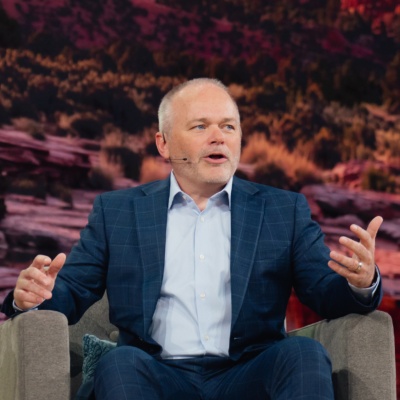
At Workday Rising, Intermountain Health’s Mike Harmer shared how Workday agents and a unified data foundation are giving caregivers time back, lowering costs, and improving patient care.

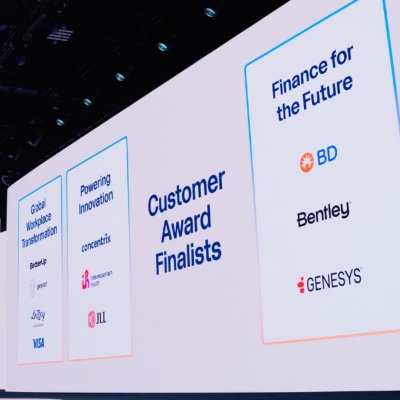
Hear from the leaders behind transformations across HR, finance, and IT about what each award means to them.