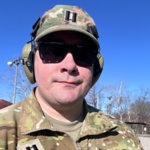
Then, a few days before I left, our HR team called. Our company handbook was still new at that time and had a very generic military leave policy; they had updated the policy to cover the full difference between my Workday pay and my military pay for the entire duration of my deployment. That is not required by law. Then, while I was deployed, teams across Workday sent me huge care packages—moving boxes full of snacks. My fellow servicemembers, many who barely knew me, were like, "Who are you?"
That support has never wavered and has allowed me to serve in major leadership roles, including a command tour, duty at the Pentagon, and my current role as a deputy wing commander, all while growing my career at Workday to global CTO. That said, my amazing Workday colleagues who shoulder additional responsibilities in my absence are truly an extension of my service.
There are so many things veterans learn in uniform that every civilian employer should want. In the military, you’re teamed with people from every socioeconomic class, every ethnicity, and every background, but everyone is united in purpose and learns how to function as a team in order to succeed.
From there, servicemembers learn to operate in what we call the "VUCA"—a volatile, uncertain, complex, and ambiguous environment. As they learn to navigate VUCA, where everything is on the line, they become stronger, and they can bring that strength to a civilian employer.
We used to call these "soft skills,” but they aren’t. These are hard skills. They are hard-won. And they add massive value to any organization that’s simply willing to recognize them. This is why I’m so passionate about hiring veterans.